
Monday, 24 January 2022
D&D Monsters: Umber Hulks


Saturday, 22 January 2022
DW Monsters: Zygons
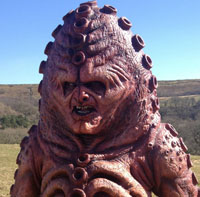 The fourth race on my list of the seven key humanoid ‘monster’ races are the shape-shifting Zygons.
Appearances
The Zygons have a slightly unusual history, compared with those I’ve dealt with so far. They first appear slightly later, during the fourth Doctor story Terror of the Zygons, but that’s not the oddity. They immediately stood out due to a distinctive design and a particularly well-respected debut story and after that they… well, they just didn’t appear again in the classic series. In fact, they didn’t appear on TV again for another 38 years, although they have now shown up as significant antagonists twice in the modern era.
Wednesday, 19 January 2022
D&D Monsters: Devils
 In regular English, the term 'devil', when not applied specifically to Satan, is essentially synonymous with 'demon'. Whereas the word 'demon' originally had a more benign meaning, 'devil' has always meant an evil entity, and now typically means one that is specifically part of the Christian mythos even if the general concept exists in other religions, too.
 In D&D, however, devils are distinct from demons, making up the organised legions of Hell rather than being rampaging creatures of malevolent chaos. In 1E, six main types exist, although other common ones have been added since, all fitting within a defined hierarchy where weaker devils can (with difficulty) be promoted to higher ranks at the whims of those even higher up the chain. Compared with the demons, these six standard types are more likely to owe their origins to myth or at least to traditional depictions of such beings, rather than just being odd combinations of animal parts.
Sunday, 2 January 2022
D&D Monsters: Erinyes

Some versions of the myths state that there are only three Erinyes, but others are much vaguer about the numbers. Notably, the three named Erinyes stand guard over the City of Dis surrounding the Sixth Circle of Hell in Dante's Inferno. It may be this that inspired their adoption as a type of "devil" in D&D, although they (and Dis) are moved to the Second Circle in the 1E Monster Manual, befitting their status as the weakest of the true devils in that edition. Something of a demotion from their mythic origins, then.
Subscribe to:
Posts (Atom)